
Florence's Historic Cafés in Italy

By Julia Paiva
· 3 min read
Translated with AI assistance.Read the original in Portuguese
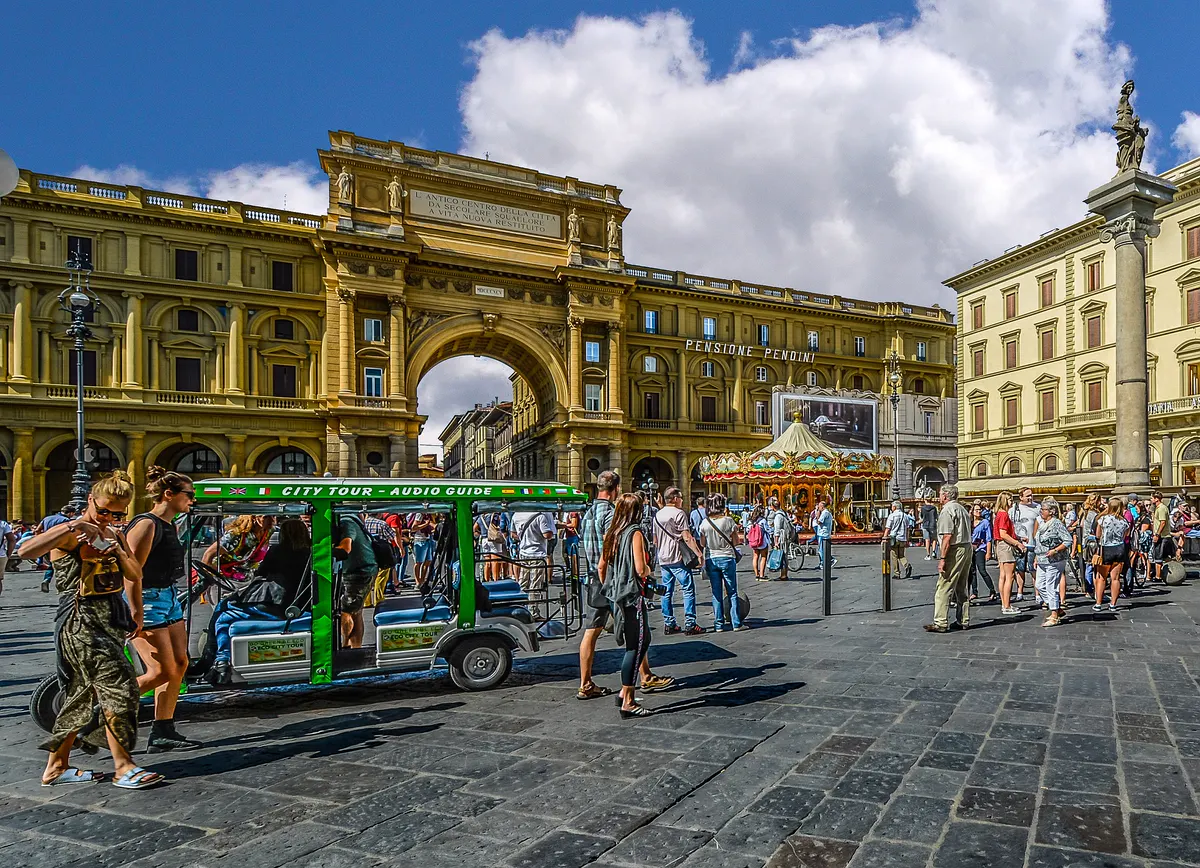
Go beyond Florence's monuments, museums and buildings. Discover the city's famous historic cafés
Exploring Florence through its buildings, monuments and museums is certainly a great way to experience the charm of the city of the Medici, which has remained intact over the centuries. Visiting the city's historic cafés is also like plunging into its soul and history.
In fact, the fame of some of Florence's most famous streets and squares is tied precisely to these important meeting places. This is the case of Piazza della Repubblica, one of the most beautiful squares in Florence. Contrary to what one might think, the square's fame is not due to its architecture or the famous arch, but rather to its literary cafés: Le Giubbe Rosse, Gilli and Caffè Paszkowski. All three were involved in different ways in one of the greatest cultural phenomena of the 20th century, Futurism, a literary and artistic movement dedicated to the myths of modernity, strength, speed and power, seen as embodiments of technology and progress.
Le Giubbe Rosse
Le Giubbe Rosse opened in 1827 and got its name from the red jackets worn by its waiters. It was already a favorite spot for many intellectuals of the time in the early 1900s. However, after the publication of the Futurist Manifesto in 1909, it became the headquarters of Florentine Futurists, in particular Filippo Tommaso Marinetti, Umberto Boccioni and Carlo Carra, and later became a meeting point for Italian and foreign writers and artists.
Initially it was a chess club (it is said that Lenin was a frequent guest) and it never lost that reputation. Between the two World Wars it was the home of the famous magazine “Solaria,” which introduced Italians to writers such as Joyce, Kafka and Virginia Woolf.
Its walls are still decorated with Futurist and neo-Futurist paintings in an elegant yet casual setting, where one can savor typical Florentine dishes. There are also many photos, drawings and memorabilia of its famous patrons. It remains a center of culture and art.
Concerto Paszkowski Caffè
Caffè Concerto Paszkowski opened in 1846 as a beer hall, but soon became a café where the Concerto Paszkowski performed, as well as a famous all-female orchestra, a rarity for the time. This café-brasserie quickly became a meeting point for leaders of literature and art in the early 1900s; after the war, its musical identity decisively turned toward cabaret.
Even today this old musical tradition is well represented by the artists who perform there. There are also lectures and fashion shows, while its tea rooms are a must for foreign visitors who want to take a break. In 1991 it was declared a national monument.
Caffè Gilli
At the beginning of the century, Caffè Gilli was an elegant meeting place frequented by artists and intellectuals such as Marinetti and Soffici. It is a Belle Époque-style café with ivory-colored walls, Murano glass chandeliers, painted ceilings and arches that reflect the good taste and liveliness of the Florentines.
Many photos of international artists are immortalized in its rooms. But it was outside Caffè Gilli that the famous photograph by Ruth Orkin titled “An American Girl in Italy,” taken in 1951, was shot.
The photo, which shows 23-year-old American Ninalee Craig walking on the sidewalk in front of the bar, surrounded by the admiring glances of young men, has over time become a well-known icon of film and photography.
Beyond Florence, follow MídiaTuris on social media:
Instagram: @midia.turis
TikTok / Twitter / Facebook: @midiaturis