
Venice Announces Museum Reopening in Its Anniversary Year and Reveals Its Charms

By Julia Paiva
· Updated · 5 min read
Translated with AI assistance.Read the original in Portuguese
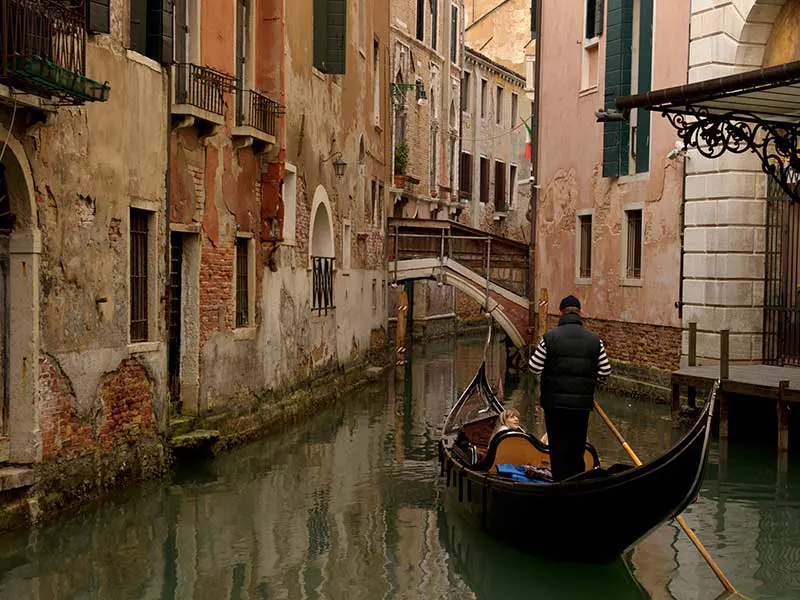
The Civic Museums of Venice have reopened: since April 26, the Doge's Palace and the Correr Museum can be visited every day. Other attractions will reopen soon.
With the move to the yellow zone of the Veneto region this morning, Monday, April 26, the Civic Museums of Venice reopened their doors. The Palazzo Ducale and the Correr Museum will be open every day of the week, while starting Friday, April 30, the other museums of the Civic Museums Foundation will also reopen Friday through Sunday. Online reservations and ticket purchases are strongly recommended at the website www.visitmuve.it. Today, at the same time, the Campanile di San Marco has also opened for visits, and in the coming days other outstanding museums, such as the Gallerie dell'Accademia and the Peggy Guggenheim Museum, will return to showcase their treasures. Other major in-person events are already scheduled: the Architecture Biennale, set for May 22 to November 27, and the Boat Show, scheduled at the Arsenale from May 29 to June 6. The resumption of cultural activities is a gift to the city, which has turned 1600 years old, and to its visitors.
Below are the opening hours and days of the Civic Museums of Venice:
Palazzo Ducale: every day of the week, 10:00 a.m. to 6:00 p.m.
Correr Museum: every day of the week, 11:00 a.m. to 5:00 p.m.
Ca' Rezzonico Museum: Friday through Sunday, 11:00 a.m. to 5:00 p.m.
Ca' Pesaro Museum: Friday through Sunday, 11:00 a.m. to 5:00 p.m.
Palazzo Mocenigo: Friday through Sunday, 11:00 a.m. to 5:00 p.m.
Natural History Museum: Friday through Sunday, 11:00 a.m. to 5:00 p.m.
Glass Museum: Friday through Sunday, 11:00 a.m. to 5:00 p.m.
Lace Museum: Friday through Sunday, 12:00 p.m. to 4:00 p.m.
Casa di Carlo Goldoni: Friday through Sunday, 12:00 p.m. to 4:00 p.m.
Updates and more information about visits will be available on the Foundation's website www.visitmuve.it .
Venice
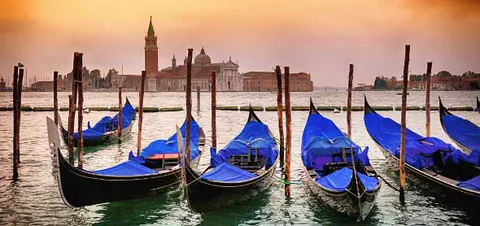
Elegant, precious, inimitable, fun, romantic: this is Venice, jewel of the Italian tourism scene, where churches, palaces, ancient bridges, monuments and squares reveal the artistic and cultural vibrancy that marked and still marks the history of this city.
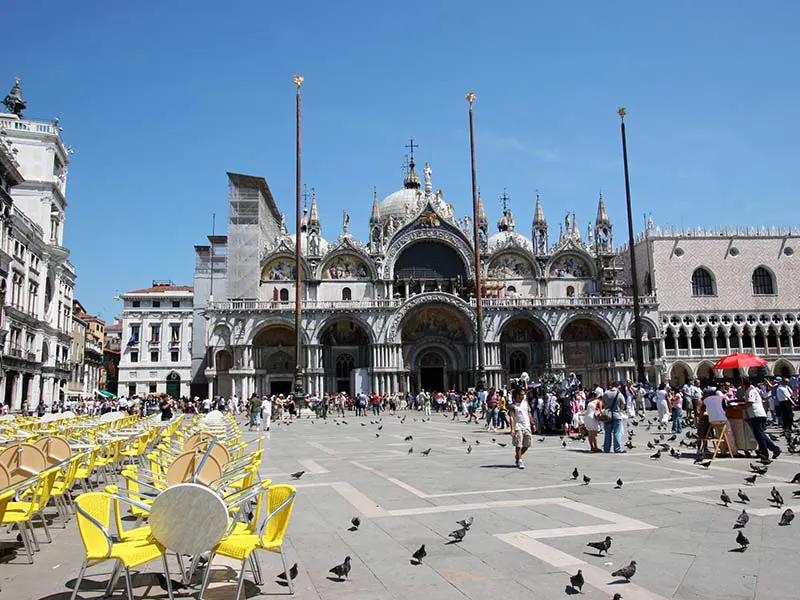
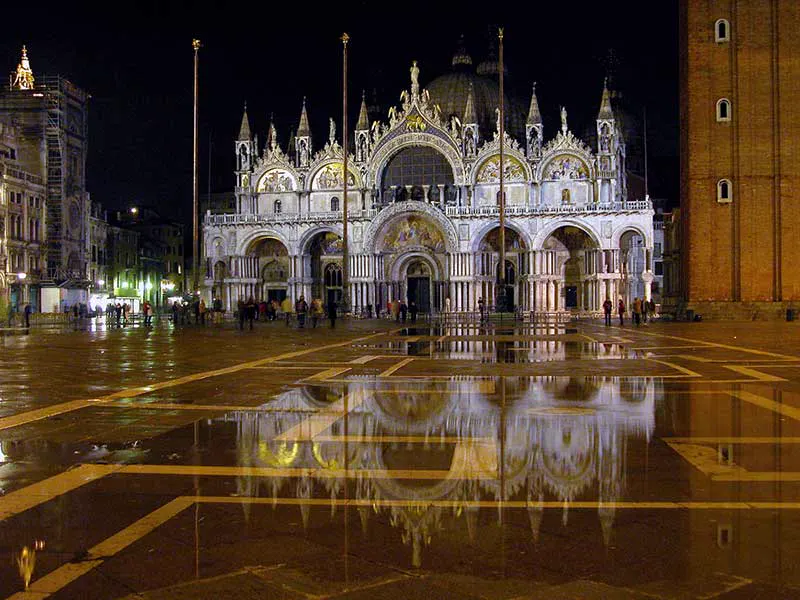
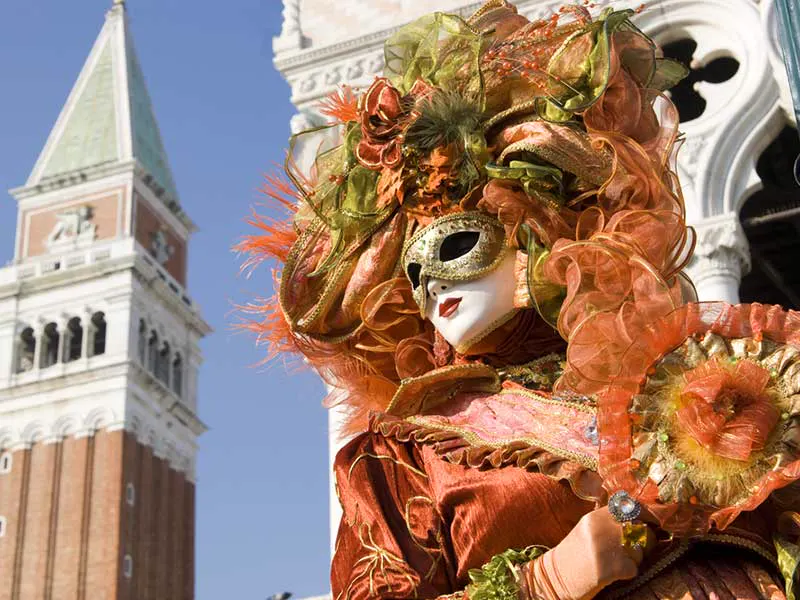
The heart of Venice is the marvelous Piazza San Marco, considered the most elegant living room in Europe, surrounded by works of unquestionable value: the imposing Campanile and the Basilica with its five portals and marble and mosaic decorations that foreshadow the brilliance and richness of its interior; the Palazzo Ducale, symbol of the golden age of the Serenissima; the Torre dei Mori, better known as the Torre dell'Orologio, for the engineering marvel that marked Venice's era for centuries; the Napoleonic Wing, where the Correr Museum is located.
Across the square there are several historic cafés, such as the marvelous Caffè Florian: opened in 1720, it is the oldest café in Italy. The interiors are elegant, with standout stuccowork (a type of plaster), paintings, mirrors… Among the distinguished guests who have sat at its tables are Giacomo Casanova, Lord Byron, Foscolo and Gabriele d'Annunzio.
Not far from Piazza San Marco is Campo Santo Stefano, with the church of the same name.
Venice's "campi" are historic squares, often adorned at their centers with valuable monuments and dominated by imposing and splendid religious buildings, from which they take their name. The streets, instead, are called calli (the singular is "calle") that wind between two continuous rows of buildings. Venetians say the best way to learn about their marvelous city is to take a street and walk without direction, without a map and without fear of getting lost, because, as if by magic, you will always end up… in Piazza San Marco.
From Piazza San Marco, crossing the famous Bridge of Sighs, which offers a marvelous view over the canals, you will reach the Castello district, rich in architectural and artistic works, where the church of Santa Maria dei Miracoli is located, considered by many one of the most beautiful in the city. Continuing the walk through the streets, you reach the "Arsenale", for centuries the largest in the world, built in the 12th century and later expanded thanks to Venice's great political and commercial development, now home to the Biennale of art and architecture.
The International Film Festival is held, however, at the historic Palazzo del Cinema on the Lido.
From Piazza San Marco, you can see the island of San Giorgio Maggiore and the tall bell tower rising from its monumental complex, a masterpiece by great architects, including the famous Andrea Palladio. A true open-air museum that can be seen while passing along the waters of the Grand Canal, the city's main "street", which begins at Punta della Dogana, the old port of the Serenissima, with its distinctive triangular shape. There are four bridges crossing the canal: the Accademia Bridge, the Rialto Bridge (the oldest and most famous), the Scalzi Bridge and the Constitution Bridge.
Punta della Dogana, on the Grand Canal, houses several buildings, including the customs complex which, together with Palazzo Grassi, both located in the Pinault Foundation François, are centers of excellence for contemporary art in Italy and around the world.
Not to be missed: the Peggy Guggenheim Collection, on display at Palazzo Venier dei Leoni, a prestigious collection of 20th-century works of art. Further on, other important museums: the Galleria dell'Accademia, housed in the majestic complex of the Scuola Grande della Carità, which also includes the church of the same name and the monastery, and Ca' Rezzonico, one of the most beautiful Renaissance palaces, an 18th-century museum in Venice.
Also in the western part of the city are the districts (six zones that divide Venice) Cannaregio, Castello, Dorsoduro, San Marco, San Polo and Santa Croce, with some of Venice's most famous "campi", framed by imposing religious buildings.
Islands
Around Venice, four islands stand out: Burano, famous for lace production; Murano, for glass processing; Pellestrina, characterized by sandy dunes and tall reeds; Torcello, one of the oldest human settlements in the region.
Follow MídiaTuris on Social Media:
Instagram: @midia.turis
TikTok / Twitter / Facebook: @midiaturis