
Third Edition of NaLata Festival Turns São Paulo into a Giant Open-Air Museum

· 6 min read
Translated with AI assistance.Read the original in Portuguese
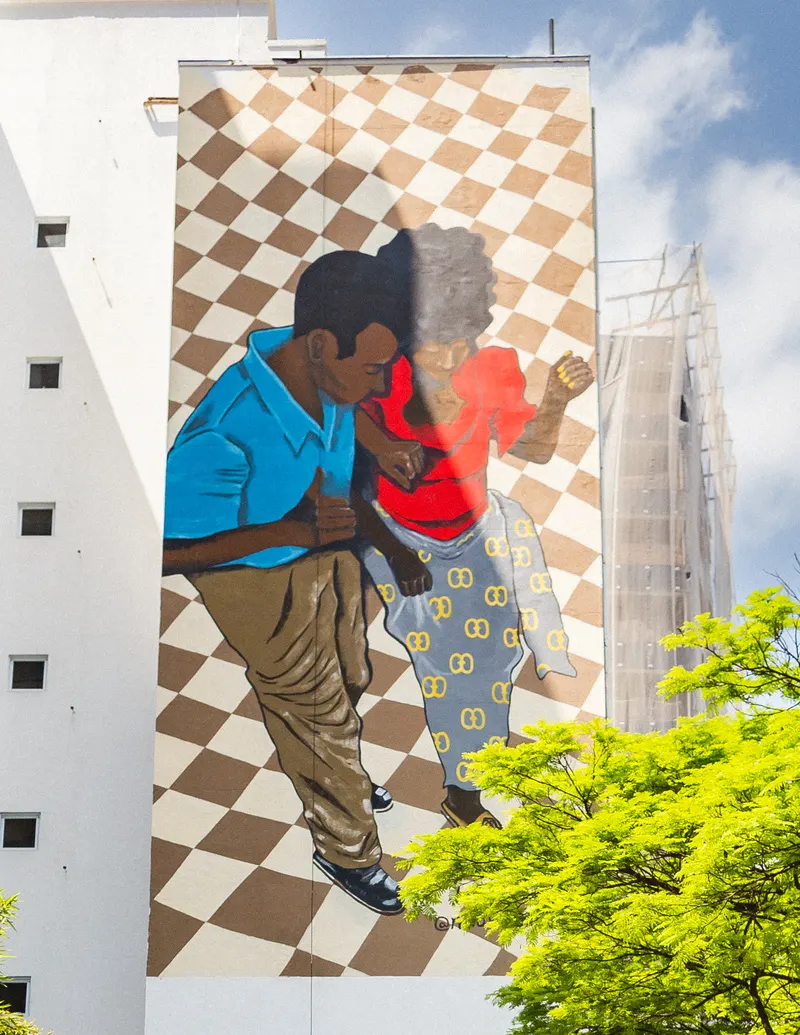
For the third consecutive year, the NaLata Festival Internacional de Arte Urbana is transforming the landscape of the city of São Paulo by championing street art. The event features 14 artists and takes place in the neighborhoods of Pinheiros, Vila Madalena and in France. The government of the State of São Paulo, through the Secretariat of Culture and Creative Economy, presents the 2022 edition of the festival. Co-produced by Agência InHaus, NaLata and C.B ME, the artistic curation is by Luan Cardoso, with sponsorship from Tiger, QuintoAndar, Mars, Suvinil, Loga, TNT and eco-sponsorship from Bom Ar.
In order to promote the democratization of art in urban spaces, as a kind of open-air museum, the theme proposed for this edition is Resistance. “NaLata provides a different cultural experience in an open space that is always in constant motion. For us, art is an important tool of resistance, (de)marking of spaces and transformation. Bringing together works by new artists with already established names is a great gain for the city, which increasingly becomes relevant on the world muralism scene,” says Luan Cardoso.
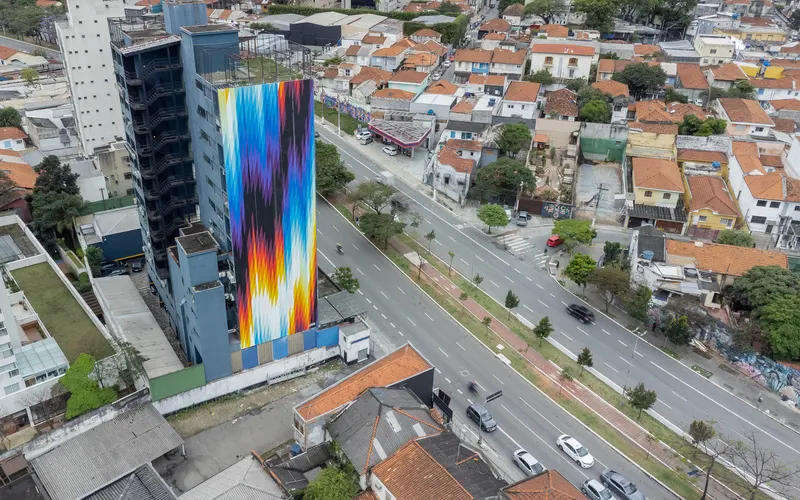
Argentine Felipe Pantone is one of the artists invited to join the group of talents that will transform scenes in the São Paulo capital. A major name in contemporary art and recognized worldwide, he has been a graffiti artist since the age of 12. In his work, he makes heavy use of the collision between the analog past and the digital future. For Felipe, his art is a form of reflection on how we consume visual information. Furthermore, for him, thanks to technological advances and the invention of televisions and computers, human perception of light and color has changed completely.
His compatriot, the artist and architect Pastel FD, also takes part in the festival. His work does not follow the conventional architectural standard and is oriented toward creating a natural dialogue with the environment. His floral style references flowers and plants that grow between sidewalks and in urban environments, as a critique of the human impulse to control space.
The painter and sculptor alexHORNEST, one of the pioneering names of graffiti on the streets of São Paulo, draws inspiration from the relationship between the city and its inhabitants to compose his works. The artist also believes in the possibility of interaction between the work and the viewer, where each depends on the other to exist. To create textures and contrast between layers, alexHORNEST typically uses a mix of oil, acrylic and automotive paint as the main element of his paintings, enhancing the three-dimensionality that is a constant in his productions.
Also, Brazilian Arlin Graff, who currently lives in Cleveland, uses geometric elements to compose his works and also draws inspiration from wild fauna, conducting in-depth studies on each animal in order to understand the anatomical construction and instinctive behavior of each. Graff will bring to NaLata a painting of a jaguar, reframing the landscape of Rua Pedroso de Morais, in Pinheiros.
Another highlight will be Rafael Sliks, one of the leading names in the global urban art scene. His personal style references major figures such as Lascaux, Da Vinci, Magritte and Yves Klein, without losing its urban identity and being strongly influenced by skate and the affectionate memory of comic books read in childhood. At NaLata, Sliks will paint his first blank-wall mural in Brazil.
Visual artist Manuela Navas will also perform. Using painting, photography and woodcut techniques, she often portrays everyday scenes in her works, almost always starring Black and female bodies.
Representing the first generation of graffiti artists in Brazil, Speto will bring his unique style to the skyscrapers of São Paulo, inspired by Brazilian folklore and cordel literature. In the 1980s, while still a teenager, the artist bought his first spray can after being inspired by the film Beat Street, and in the 1990s he was already helping shape the visual identity of renowned bands of the era, such as Planet Hemp, Raimundos and Nação Zumbi.
Contemporary muralist Apolo Torres will be at the event; his works have already been exhibited in Brazil, Italy and the United States. Recognized for featuring in his works different perspectives on the world and on the body one inhabits, Apolo proposes for this festival a blank-wall mural reproducing the interior of several apartments, reflecting the way of life of the São Paulo citizen.
Mônica Ventura will bring the installation Luz Negra to the Largo da Batata region. “A happy Black woman is a revolutionary act” is the phrase by writer Juliana Borges displayed on the sign created by Mônica. Her work revolves around the complexity of Black women within diverse social and cultural contexts.
São Paulo native Ise is one more of the festival's attractions. His proposal is to develop works relating portraits and identities through small graffiti pieces scattered across the city, symbolizing urban and everyday characters.
Éder Oliveira takes part in NaLata by coloring the surroundings of Rua Inácio Pereira da Rocha, in the Pinheiros region. A native of the Salgado region of Pará, his works are held in the collections of the Centro de Arte Dos de Mayo in Madrid, Itaú Cultural, the Museu de Arte de Belém and the Museu de Arte do Rio, among others.
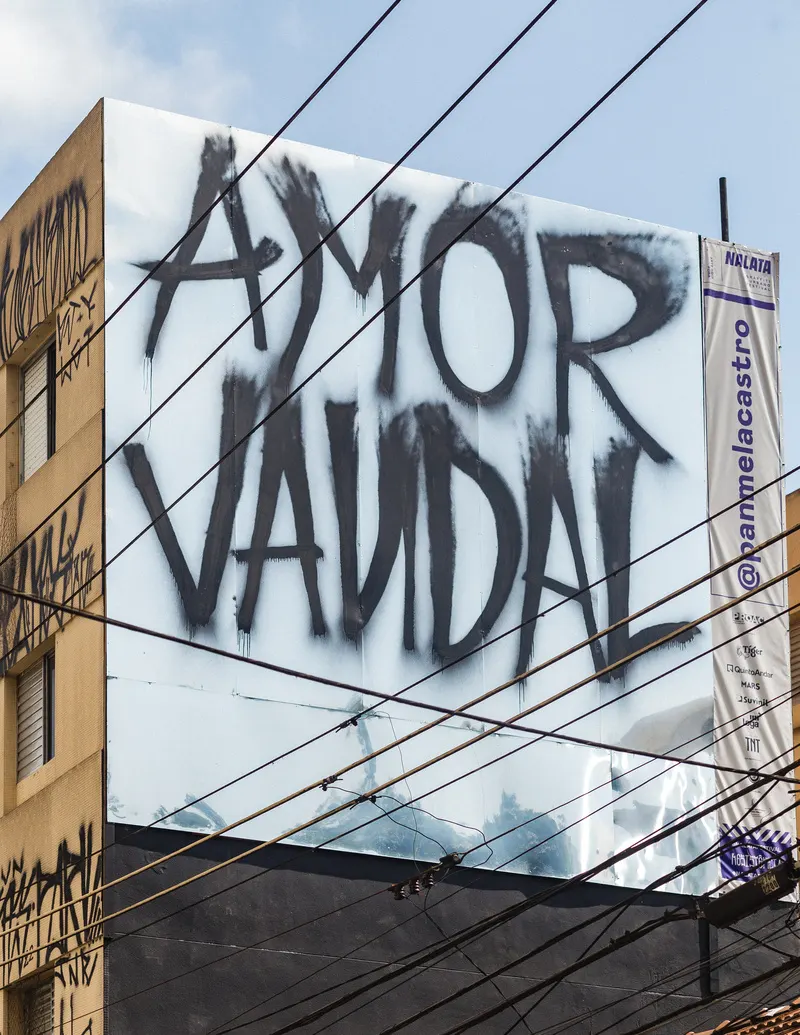
Artist and activist Panmela Castro developed her artistic trajectory from experiences in the outskirts of Rio de Janeiro. A child of pichação, funk parties and train surfing, she will showcase these influences in her installation “Amor Vandal,” part of the series of mirrors that are also on display at the 13th Mercosur Biennial.
Filipe Grimaldi is one of the heavyweight Brazilian names making up the talent lineup of the 2022 edition of NaLata. Trained in graphic design, he uses letters, words and phrases as his main signature, in which chromatic contrast is also very present.
This year's edition of NaLata also includes the production of a panel in France, signed by Brazilian Thiago Nevs, who was one of the winners of the Novos Talentos Murais SP competition held in the 2020 edition, aimed at introducing new names to the São Paulo art scene. Located in the commune of Biarritz, this will be the festival's first international foray.
Casa NaLata
The programming of NaLata Festival integrates urban art, music, workshops and events. With this, the Casa NaLata was created as a space for gathering and exchange, where all this artistic activity will take place. The programming is free and will feature workshops led by Sticker Up and the art collective SHN, in addition to installations by artists Theodoro Autops, Gueto, Coyo, Loucos, Gui Ga and Lixomania. “NaLata reinforces the transformative power of the environment through art,” says Juliano Libman, partner at the InHaus agency.
The main activations by sponsors also take place in the space. TNT, which has been part of the supporters' hall since the festival's first edition, will set up a brand lounge, and Tiger, a pure malt beer, will have an exclusive bar on site, where it will also host an exhibition that engages with urban culture, featuring the skate as a new medium for artistic creations by renowned graffiti artists. Meanwhile, QuintoAndar will have a presence in the lounge, with an exhibition of lambe-lambes to make clear that living well means something different to each person and that home extends beyond the four walls of an apartment, valuing the surroundings and the community.
The lambe-lambes can be taken for free by the public, who will also have access to a map of the murals created by NaLata since its first edition, in 2020.
“The Casa NaLata is a space for coexistence, resistance and occupation of the city of São Paulo through art, where everyone is invited to take part in the various activations and artistic activities,” says Luiz Restiffe, also a partner at agência InHaus.
The full programming of Casa NaLata can be viewed on the festival's Instagram @nalata.festival or on the website: https://www.nalatafestival.com.br/