
República Tcheca: Você sabe como é a Semana Santa e Páscoa no país?

By Julia Paiva
· 4 min read
Translated with AI assistance.Read the original in Portuguese
Check out some places to visit on these celebration dates or at any time of year in the Czech Republic
Velehrad Monastery in the Czech Republic
Velehrad Monastery
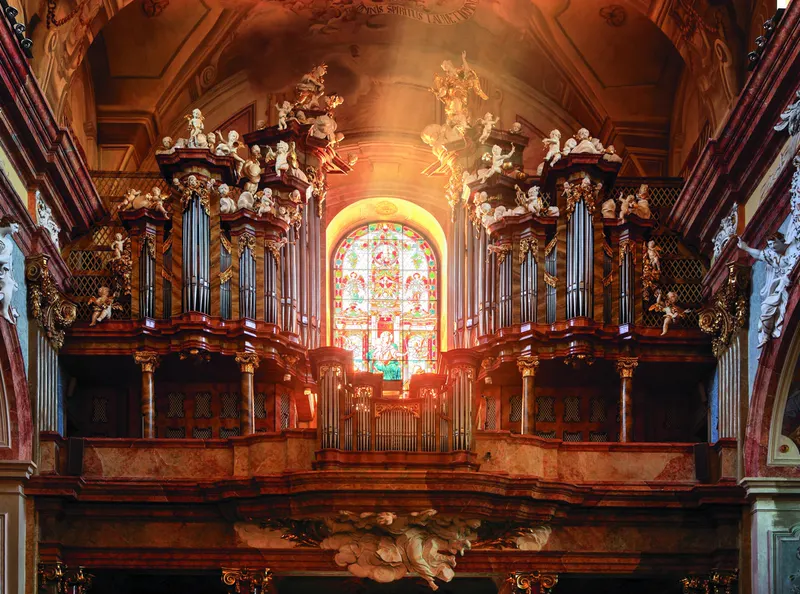
The Velehrad monastery and especially its basilica represent the spiritual center of the Czech Republic. It is here that the thousand-year history of Christianity in this part of Europe began to be written. It is the site where national pilgrimages take place every year, attended by tens of thousands of people.
The Velehrad monastery was founded in the 13th century, at the foot of the Chřibské hory mountains. Its current Baroque appearance dates from its reconstruction after the fire of 1681, and the most important part of the monastery is the Basilica of Our Lady of the Assumption and of Saints Cyril and Methodius, the most important pilgrimage church in the Czech Republic. In 1990, the Velehrad basilica was visited by Pope John Paul II.
It is one of the most important pilgrimage sites in the Czech Republic, and from April 5 to 14 the Easter and Resurrection liturgies will be celebrated there.
Veselý Kopec
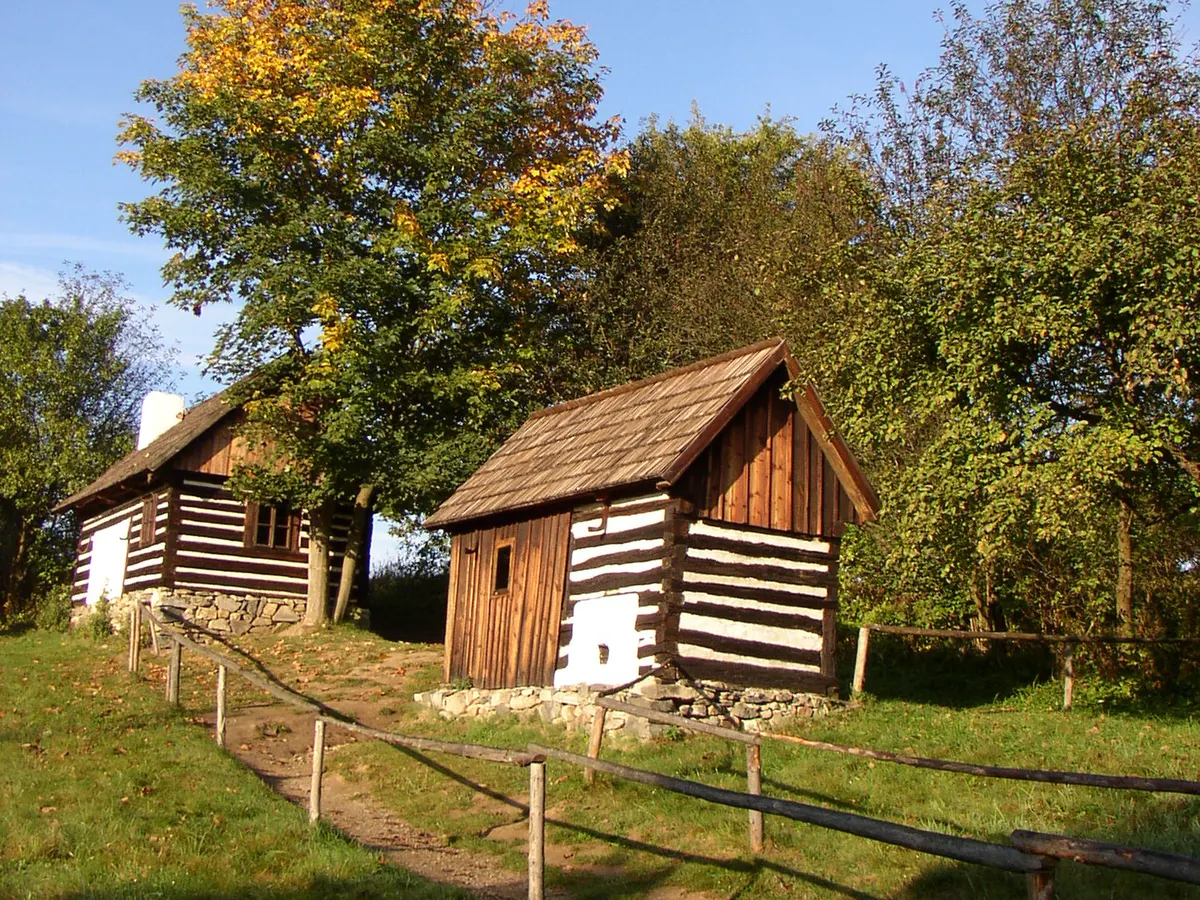
At the open-air ethnographic museum on Veselý kopec hill, near Hlinsko, in East Bohemia, you will see how people lived when electricity and machines did not yet exist.
The collection of 19th-century folk houses was preserved thanks to the work of a few enthusiasts and today includes dozens of buildings. Plan your visit during one of the events, as the museum will be full of energy. In the picturesque landscape of the Vysočina highlands, you will find not only country houses of various sizes but also technical monuments such as a craft oil mill or a machine for crushing fir bark for tanning.
Enjoy a carnival parade with the chimney sweep, with the “scarecrow,” dressed in straw and bringing health and fertility to the women who hold a straw, with the “shepherd,” who walks with a bear in the procession, or with the Turks.
The procession takes place before Holy Week and has been listed by UNESCO since 2010.
From April 9 to 12, all the houses are decorated in the Easter style. Local residents dressed in period costume explain the traditional customs of the Easter celebrations. Many of them had been forgotten but are revived once a year.
Rožnov pod Radhoštěm
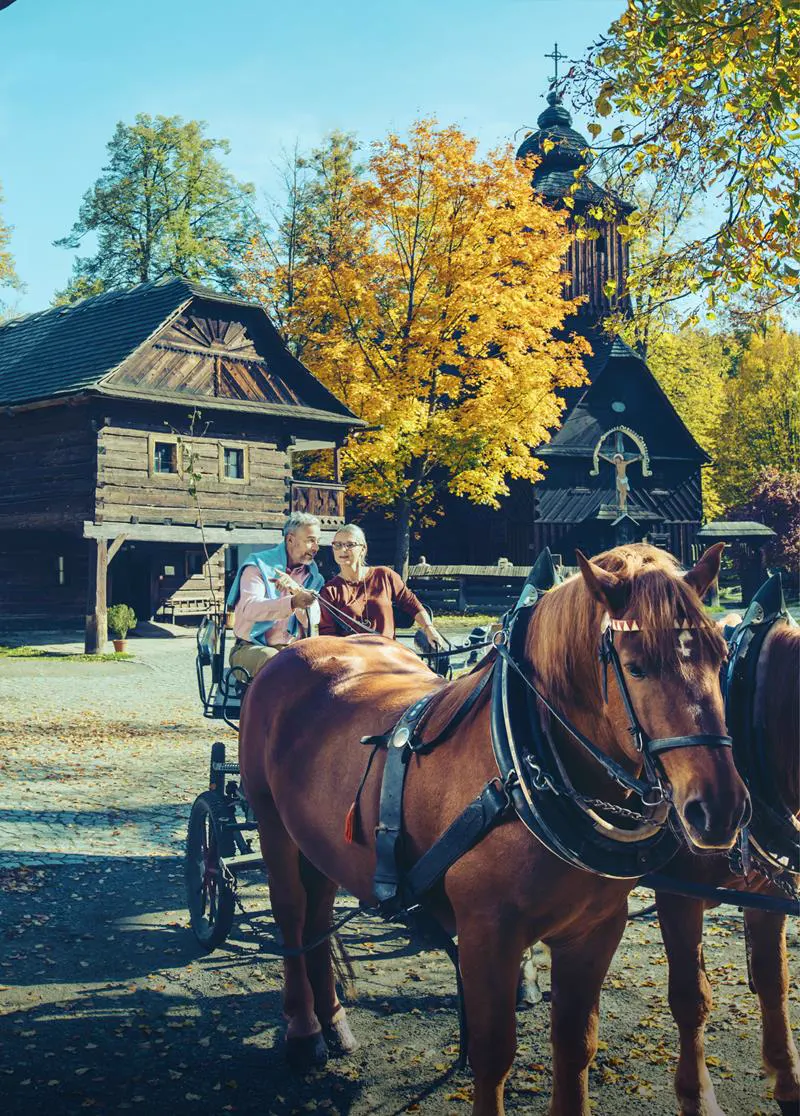
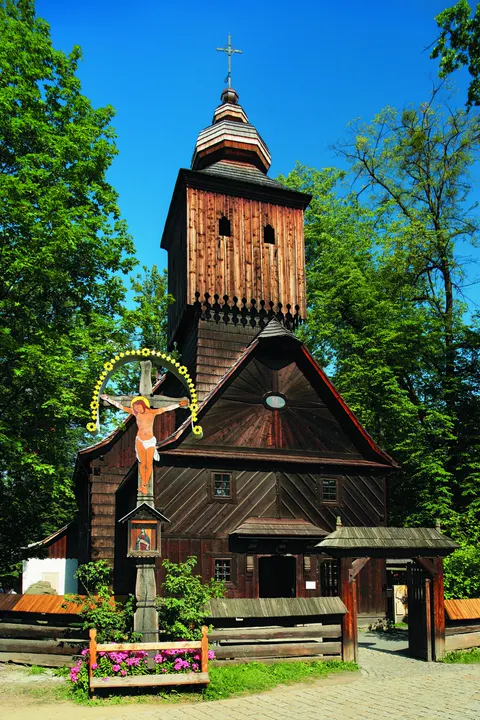
The town, located in the Rožnovská Bečva river valley at the foot of the legendary Radhošť mountain, stands out for its clean air and the scent of wood. The heart of Rožnov is an open-air museum where you can step back in time. You can see how people lived, ate, drank and worked in the 19th century. You will climb to the lookout tower that looks like a gingerbread house, pass the old spa and be able to practice sports. Visiting Radhošť, where pagan and Christian cultures intertwine, is an essential excursion.
SEE ALSO: Three options that combine glamour and camping in Argentina
The largest and oldest open-air museum in Central Europe is a national cultural monument with more than 100 original objects and composed of several parts. The wooden village represents a small rural village of the 19th and early 20th centuries. This will give you an idea of life at the time, the crafts, the authorities, the church and the spa. The Wallachian Village reproduces a real village with its farmsteads, windmill, blacksmith's workshop, wells and gardens. The mill valley features working technical buildings. Here you can see how cloth is made, the wheat milling process, oil pressing and ironwork.
Easter in the Valašsko region is one of the most representative events of Czech tradition and is celebrated at the open-air museum in Rožnov pod Radhoštěm, in Eastern Moravia. This year the festival will begin on April 3 (Saturday) with a traditional crafts fair. Here you can see the “pomlázka,” one of the Czech traditions whose roots go back to pagan times. On Easter Monday, the young men make the “pomlázka.” That is, they go from house to house visiting their young female neighbors and giving them a few symbolic spanks with braided willow switches. In ancient times, this practice was meant to ensure fertility. Its original meaning has disappeared, but the tradition is maintained and the young men always receive something sweet as a reward.
Discover other Czech regions on the page https://czechtourism.com/br/press/releases/
Follow MídiaTuris on social media:
Instagram: @midia.turis
TikTok / Twitter / Facebook: @MidiaTuris