
Orca Season in Argentine Patagonia: A One-of-a-Kind Spectacle

By Julia Paiva
· 3 min read
Translated with AI assistance.Read the original in Portuguese
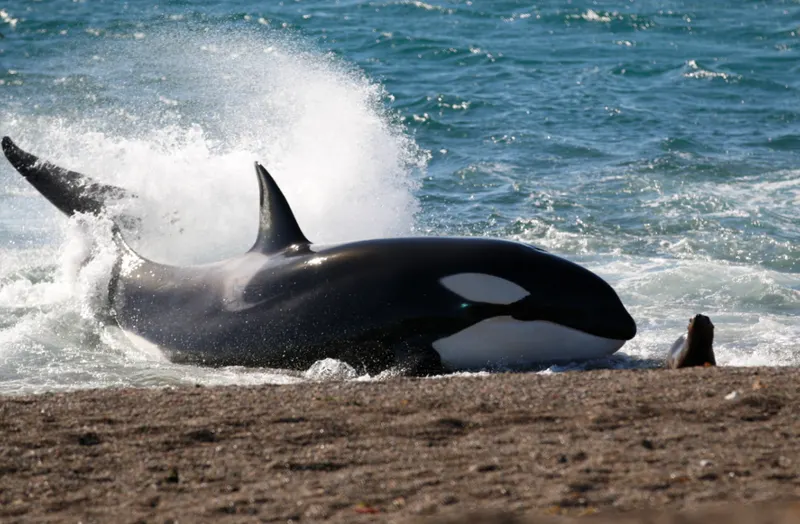
From March to May, visitors can watch the incredible orcas off Punta Norte carrying out a predatory tactic that happens only in this part of the world. The orcas propel their bodies out of the water to hunt sea lion pups. Starting this year, the “State Orca Day” is celebrated in honor of the most famous individual, Mel.
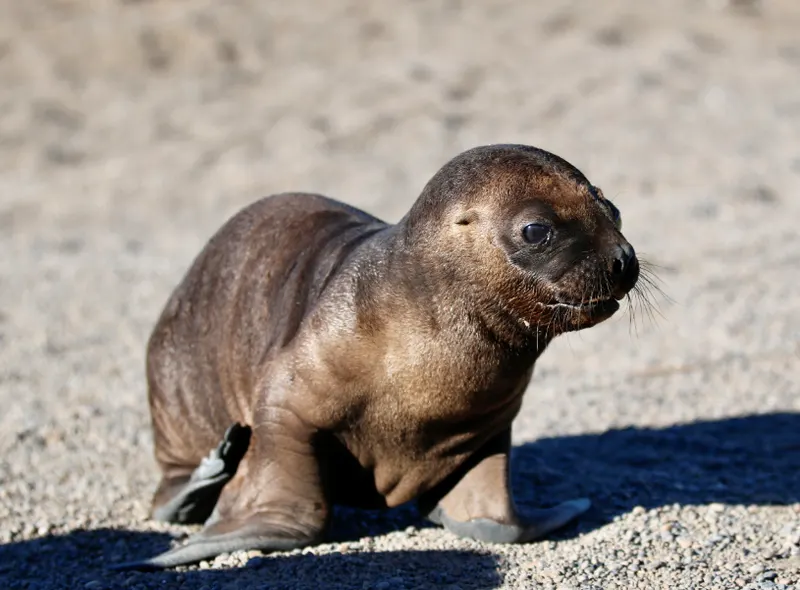
The marine mammals belong to three families, each led by a female, and some individuals travel alone. There are 23 in total. Their names are chosen by students at the Península Valdés school through a vote. Jazmín, Valen, Maga, Pao, Solei, Aiken, Karut and Mica are some of them. Each year, between March and May and again from September to December, these are the orcas that intentionally beach themselves on the shoreline to hunt elephant seal and sea lion pups, a spectacle that can only be witnessed on the coast of Chubut, in Argentine Patagonia.
The phenomenon, unique in the world, takes place around Península Valdés, a biodiversity and natural life reserve declared a UNESCO World Heritage Site in 1999. It is the only place where orcas use this technique, carried out when the tide is high and the sea is calm, at the risk of being unable to return to the depths of the ocean. In other parts of the world where orcas live, such as Norway, Canada, New Zealand or Antarctica, they feed in different ways, but always in the water.
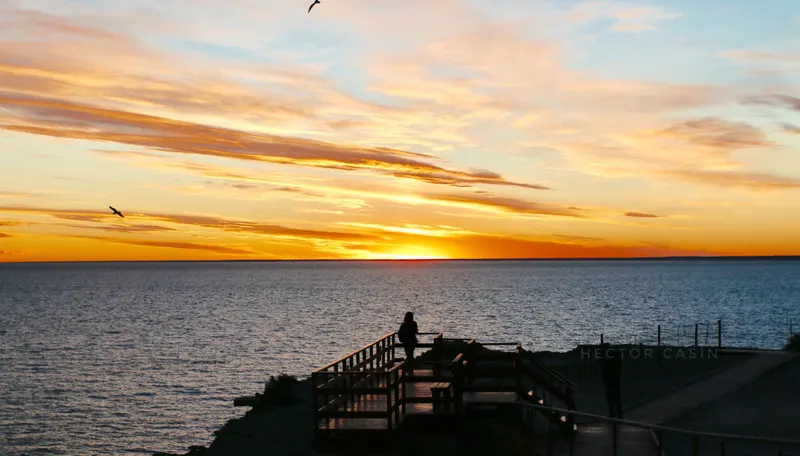
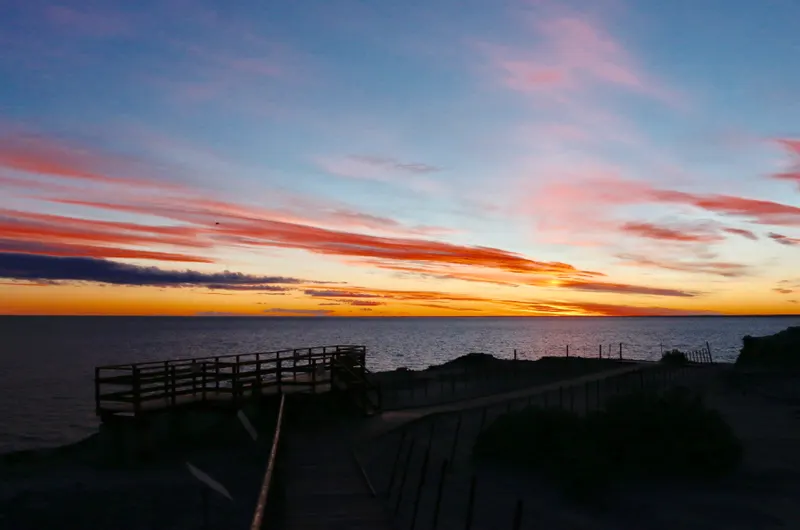
There are two geographic points from which the intentional beaching of orcas can be observed: Punta Norte, 76 km from Puerto Pirámides (between March and May), and Caleta Valdés, 79 km away (from late September to early December). Both have accessible trails and viewpoints for locals and tourists arriving in the area. When borders are open, cinematographers and photographers from around the world also come to record this singular and unique orca behavior. The best time to see them is in the window around the peak of high tide, when the sea is calm.
The Orcas
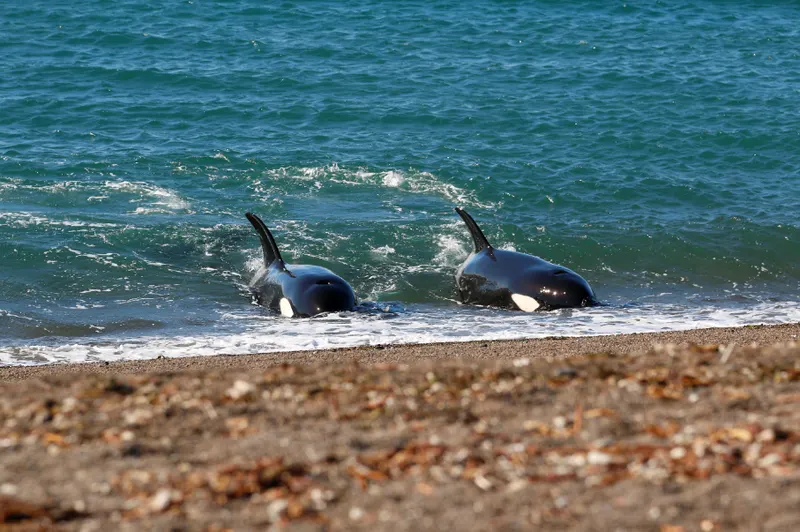
Orcas live between 50 and 80 years and generally form matriarchal families, led by the oldest female. Males can reach about nine meters in length, and females about six. At 12 years old they reach sexual maturity, and gestation, which produces one calf at a time, lasts 17 months. Young family members are taught the beaching technique by their elders until they begin practicing it themselves.
The History
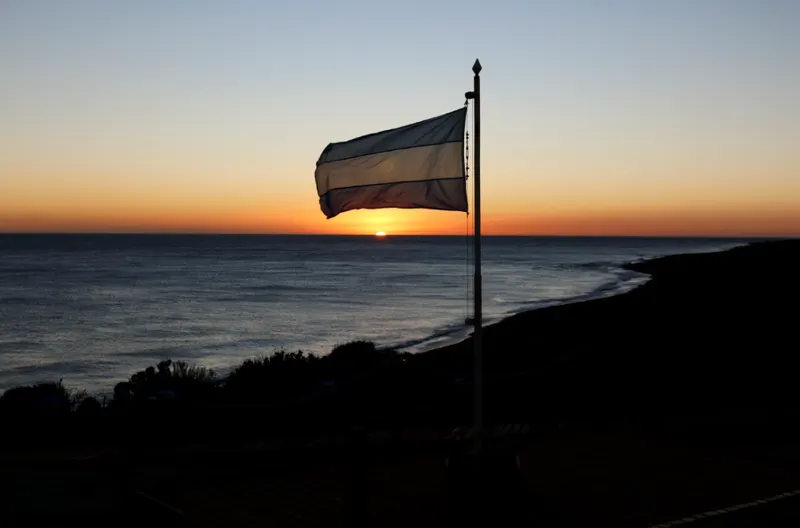
In 1974, Juan Carlos López, a park ranger at Punta Norte, began observing the orcas on Península Valdés. Bernando and Mel were the first ones he identified, two males who beached themselves together until 1993, the year Bernando disappeared. Mel continued visiting the coast alone and ultimately became the most famous orca in the world after being filmed by National Geographic and BBC crews.
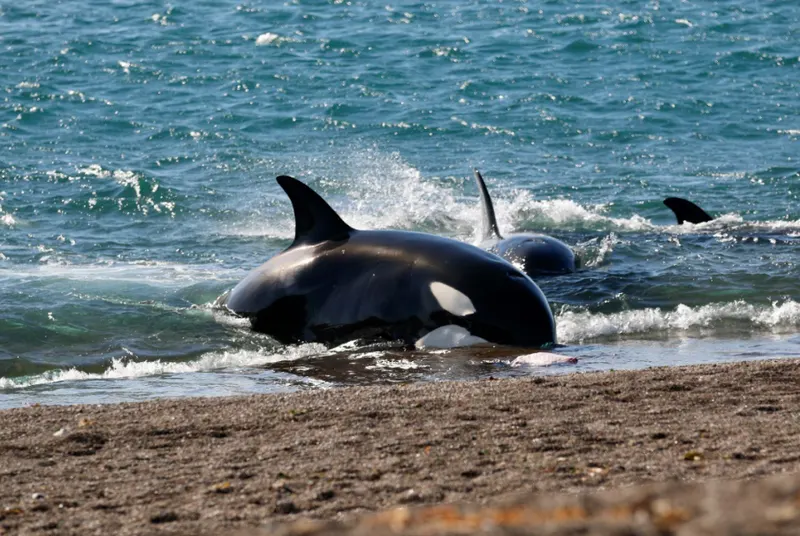
March 16, 2011, was the last day Mel was seen, which is why that date was chosen to celebrate the “State Orca Day.” The names Bernando and Mel were chosen in honor of two scientists who studied orca behavior in the region, Bernard Würsig and his wife Melanie.
Follow MídiaTuris on Social Media:
Instagram: @midia.turis
TikTok / Twitter / Facebook: @midiaturis