
Japan: Beyond Cherry Blossoms, Spring in the Country Enchants With Flowers and Varied Colors

By Julia Paiva
· 6 min read
Translated with AI assistance.Read the original in Portuguese
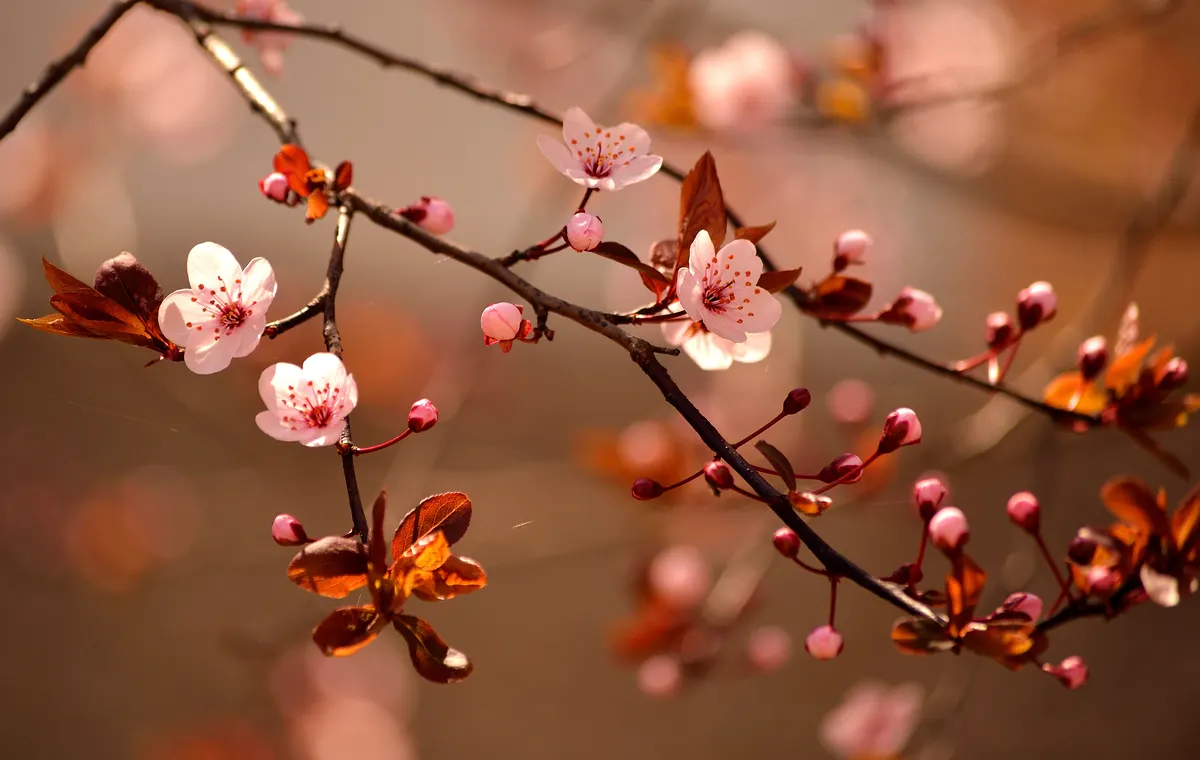
Ume plum trees, wisteria and nemophila paint the archipelago. The Japan National Tourism Organization (JNTO) points to the best places to enjoy the spring flowers in the country
Spring is one of the most anticipated seasons in Japan. With its arrival in March, the weather begins to warm and the flowers bloom, decorating the landscapes with varied colors. From late February through June, it is a tradition in the country to stroll the streets and visit parks to enjoy the gradually warming weather, moving from south to north, and to admire the flowers.
The best known is the cherry blossom, or sakura, one of Japan's symbols, and the tradition of admiring it is called hanami, which literally means viewing flowers. However, spring in the archipelago has much more to offer. During the season it is also possible to see the blooming of the ume plum trees, wisteria (fuji) and nemophila. The Japan National Tourism Organization (JNTO) presents the range of colors of Japanese spring and the best places to admire the beauty of the flowers.
Ume: the announcement of spring
Just like the sakura, plum trees are also highly appreciated in Japan. The blooming of the ume, also called baika, in late February and mid-March, signals the transition from winter to spring. The flowers are symbols of perseverance and overcoming adversity, since they are not affected by snow, which is still present in some regions of the archipelago at the end of February. The plum trees range in shades of pink, are known for their fragrance and for their contrast with the landscape at this time of year.
zulazhar/Shutterstock.com
The province of Ibaraki is famous for the blooming of the ume. In the region, between late February and late March, the Mito Plum Festival takes place at Kairakuen, one of the largest events in the east of the archipelago. Considered one of Japan's three great gardens, the site is home to 3,000 plum trees. During the festival, the park offers guided garden tours, plant fairs, musical performances with traditional Japanese instruments, and a guided night walk to enjoy the flowers by candlelight along with a fireworks show.
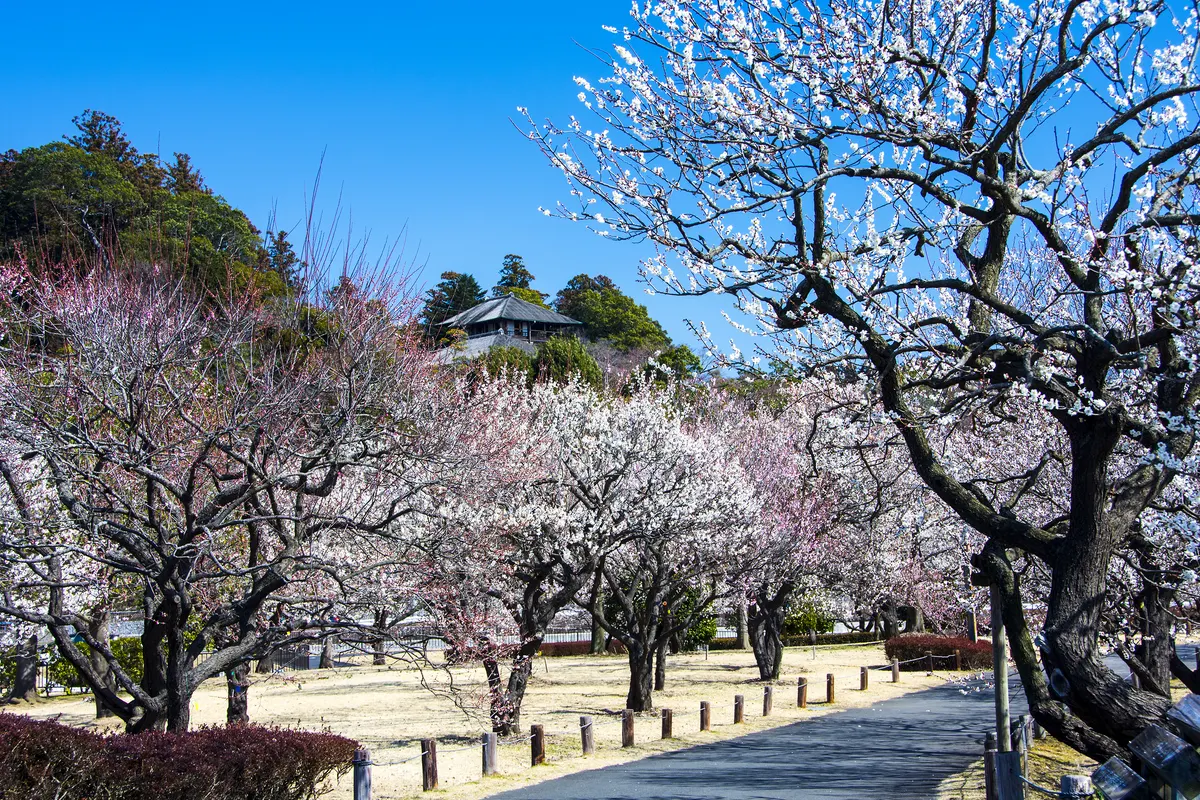
In Fukuoka, in the province of the same name, a special place to see the ume and experience traditional Japanese culture is Bairinji Temple, dating from the 17th century. The outer garden of this sacred site is famous for having more than five hundred plum trees. Visitors can enjoy a cup of tea and sweets under the flowering trees. The Buddhist temple also houses a collection of cultural treasures, such as the silk scroll of the three Buddhas and a painting of Mount Fuji by Ogata Korin, a famous painter of the Edo Period.
Sakura: the symbol of Japan
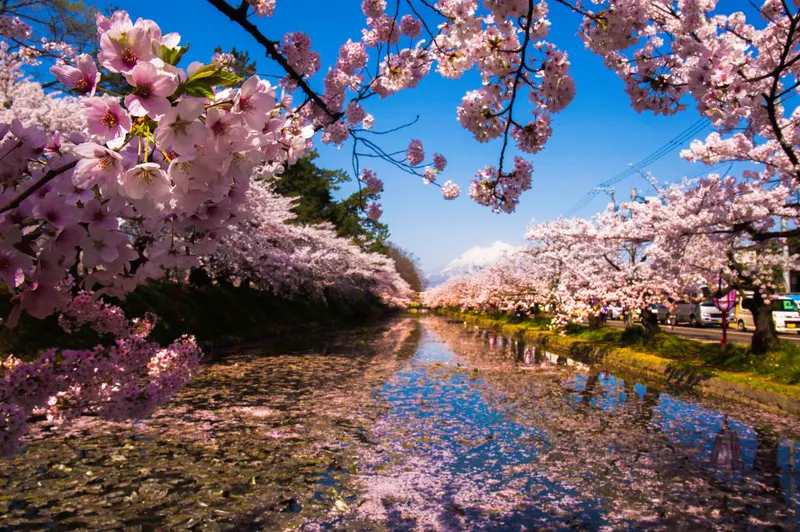
Japan's most famous flowers begin to appear in the southernmost part of the archipelago, on the island of Kyushu, in mid-March, and gradually spread north, coloring the territory in shades of pink and white all the way to Hokkaido by April. The cherry blossom bloom is a milestone in the Japanese year and carries a special meaning: everything good does not last long. The flowers bloom only once a year and the trees stay laden with them for five to seven days. That is why it is common in Japan to celebrate this season with festivals, picnics and long outings with family and friends in the parks.
One of the most beautiful places to admire the sakura is Yoshino, in the province of Nara. There you will find Mount Yoshino, with more than 30,000 cherry trees. A trail that passes through the mountain's small villages and thousands of flowers leads to the summit for a panoramic view. Another highlight is the cherry blossom festivals that take place across the country during spring. In Hirosaki, in the province of Aomori, the Hirosaki Park Cherry Blossom Festival takes place. On site, you can find one of Japan's oldest sakura trees, planted in 1882, stroll through the tunnel of flowers, watch performances with music and enjoy the night illumination.
Fuji: cascades in shades of violet
The cascades of wisteria flowers also stand out in Japanese spring. The violet-toned flowers bloom in mid-April and early May and likewise spread across the archipelago, coloring the landscape. The fuji is long, can measure about 20 cm to 80 cm in length, and grows on trellises and over the tree canopies.
A famous place to admire these flowers is the Kawachi Fujien Wisteria Garden, in the hills south of Kitakyushu, in the province of Fukuoka. The garden has two wisteria tunnels one hundred meters long and a group of trees that form an enormous lilac dome. The garden offers a truly exclusive experience in Japan, as it opens to visitors only twice a year, in spring and autumn.
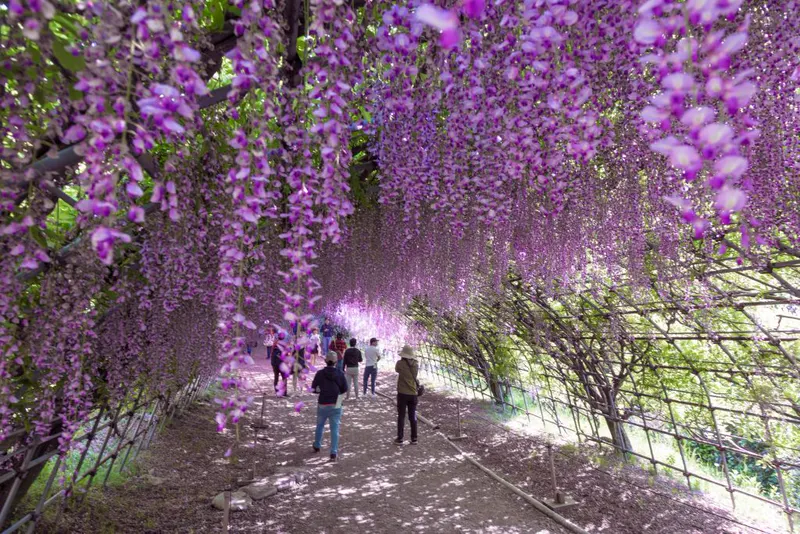
Wisteria is also famous at Kameido Tenjin Shrine, in Tokyo. The sacred site is known as the “flower shrine” and is considered the best place in the capital to admire the fuji. Between late April and early May, more than one hundred wisteria bloom during the shrine's Wisteria Festival. The flowers decorate the surroundings of the turtle pond on the grounds and provide the perfect backdrop for photography.
Nemophilas: a blue sea of flowers
Phubet Juntarungsee/Shutterstock.com
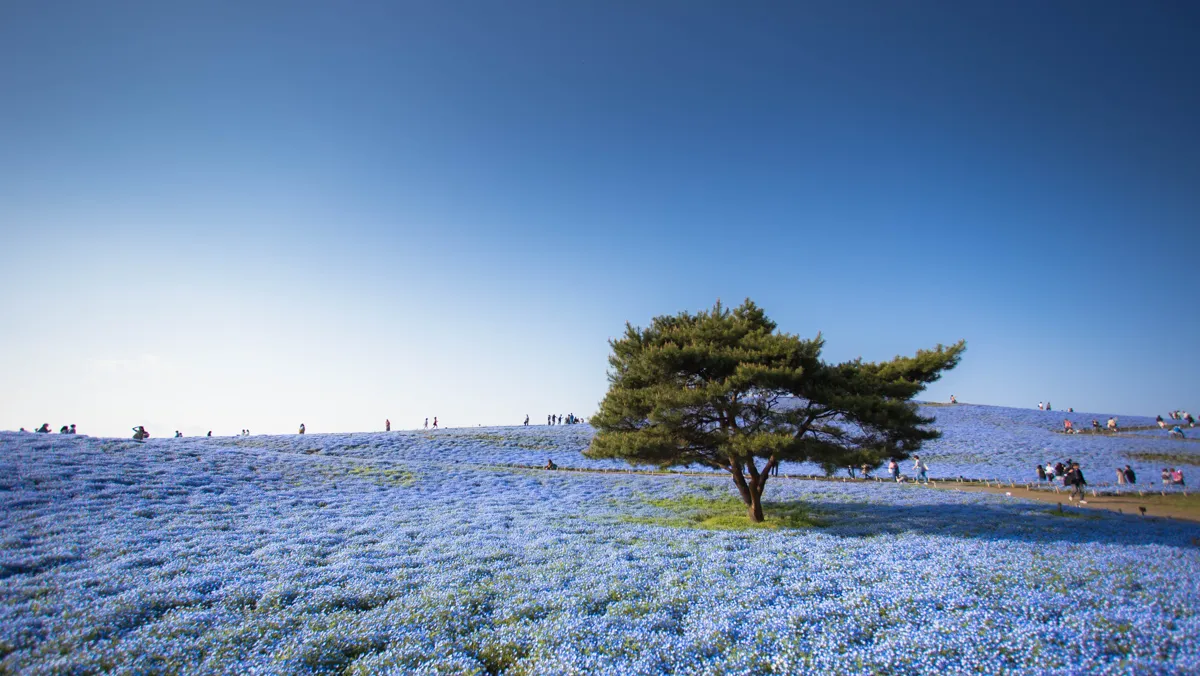
Nemophilas put on a spectacle of their own in Japan during spring. This low-growing flower, in intense shades of blue with a white center, blankets the fields and parks of the country.
The best-known place to admire nemophilas is Hitachi Seaside Park, located in Hitachinaka, in the province of Ibaraki. The park covers 200 hectares and has a wide variety of flowers that decorate the area all year round. But it is during spring, between late April and mid-May, that the blue sea of nemophilas appears. More than four million flowers bloom on Miharashi Hill, the highest point in the city, across an area as far as the eye can see that blends with the blue of the seasonal sky and of the nearby sea. The park has good facilities, a greater variety of flowers and several attractions. Visitors can admire the tulips and daffodils, try the amusement park and the bicycle trails.
More about spring in Japan
Matt Leung/Shutterstock.com
Spring in Japan runs from March to May. During the season the whole chain of Japanese islands is buzzing with festivals, there are many beautiful things to see, as well as delicious seasonal delicacies to try. Temperatures are generally mild, between 13 and 23 degrees Celsius, but they vary by month and region. The south of the archipelago, for example, begins to warm as early as late February, while the north is still cold and may get snow. It is important to check the weather forecast before packing your bags.
SEE MORE: Motorhome Traveler Profile Shifts in Brazil
Cherry blossoms are the main attraction, and it is very easy to find calendars forecasting the bloom for each region of the country. The flowers also inspire local gastronomy, and during spring you can find Japanese sweets flavored with sakura, ice cream and even chocolates. Other trending foods are bamboo shoots, tender seaweed, shellfish and many varieties of strawberries.
Follow MídiaTuris on social media:
Instagram: @midia.turis
TikTok / Twitter / Facebook: @midiaturis