
Federal Court Clears Buser Operations in Rio Grande do Sul

· 6 min read
Translated with AI assistance.Read the original in Portuguese
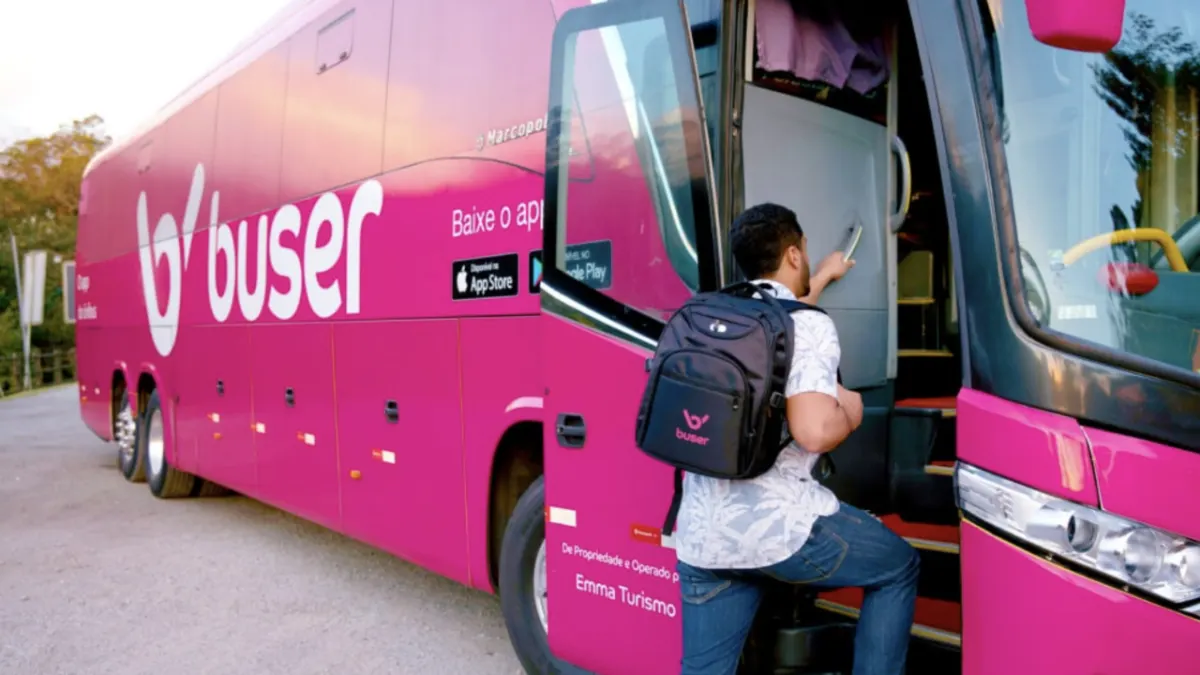
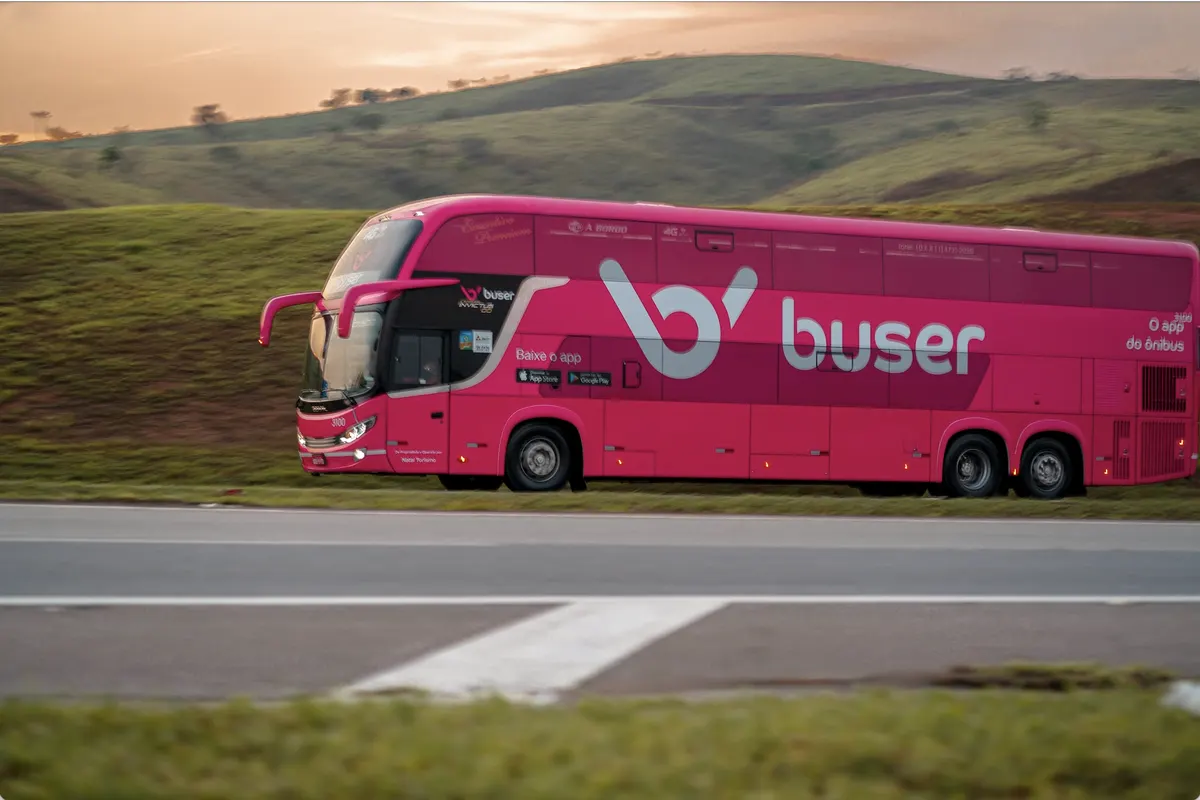
The 2nd Federal Court of Porto Alegre has cleared Buser's operations in interstate trips within Rio Grande do Sul. The ruling by Judge Daniela Tocchetto Cavalheiro decided the merits and closed the lawsuit filed by the Federation of Road Transport Companies of the State of RS (Fetergs) against the startup, which intermediates bus trips through an internet platform.
In the decision, the judge emphasized that Buser is a technology company. Therefore, since it is not a transport company, it does not need authorization or a concession from the Public Authority to operate.
“This is not a case of irregular transport under the cover of free enterprise. It is a new business model, preceding the transport itself, capable of connecting and grouping people with charter providers, which are the ones subject to the rules governing the transport business and to oversight by ANTT (National Land Transport Agency),” she stated. “At this point, I highlight that when charter providers are registered, documents related to administrative authorization are required, which attests to the legality of the activity,” she added.
The judge also recognized the legality of Buser and highlighted the importance of the startup's business model from the consumer's perspective. “The model empowers the end consumer, since the consumer is ultimately the one who benefits from the possibility of using collective charter service to travel to the same destination with other consumers, who may then use a private transport model, if they find it better and cheaper.”
For the magistrate, Buser's business model does not involve a public service. According to Daniela, this does not preclude transport companies operating regular routes, granted by the Public Authority, from joining the startup's platform. “The new format may even lead the companies represented by the plaintiff (Fetergs) to adopt the same model, which is not to be confused with the public service they provide.”
The ruling also confirmed that no rule prohibits Buser's business model. “The absence of a prohibition of this nature logically implies its permission,” she pointed out. “An indiscriminate ban on this type of service would contradict free enterprise and free competition, leading to a disproportionate growth of market reserves in favor of those economic players already established, which, moreover, harms the final consumer himself, who cannot exercise his freedom of choice.”
The judge also dismissed the claim of unfair competition. “The data submitted do not allow any conclusion regarding the reasons that caused such a decline in demand for collective transport. There is no demonstration of a cause-and-effect relationship with the subsequent emergence of app-based systems (…), so any alleged relationship is based on assumptions.”
In the magistrate's view, it is entirely possible for charter and regular transport to operate concurrently. “The existence of a different mode of transport, such as the one discussed in this case, does not necessarily imply the termination of the legal framework of regular route concessions.”
Finally, the judge also ruled out the existence of concrete evidence indicating risks to passenger safety on charter trips. She also stressed that the operations of the charter companies intermediated by the Buser platform are supervised by ANTT.
Case Law Favorable to Buser's Model
A road travel intermediation platform that already has 8 million customers across Brazil, Buser has been winning important victories in legal disputes over regulatory issues. Just as happened with individual ride-hailing apps throughout the country, this has also been the path in passenger road transport.
Buser has been obtaining important victories in the highest courts of the Judiciary in this regulatory dispute. The first clash the startup overcame against traditional companies was before the Federal Supreme Court (STF), after the Brazilian Association of Passenger Land Transport Companies (Abrati) filed a lawsuit (ADPF 574) asking the STF to declare unconstitutional all court decisions authorizing the operation of “collaborative charter” bus services through apps. On that occasion, Justice Edson Fachin (STF) denied the request to suspend Buser's app. Later, the Attorney General's Office (AGU) and the Office of the Attorney General (PGR) also found no irregularities in Buser's activity. These positions led Abrati to ultimately withdraw its claim in April 2021.
In December 2020, it was the turn of the Court of Justice of São Paulo (TJ-SP) to dismiss an appeal from the Union of Passenger Transport Companies of the State of São Paulo (Setpesp), which accused Buser of illegal passenger transport.
Then, in November 2021, the Court of Justice of Rio de Janeiro (TJ-RJ) had overturned another attempt to restrict the freedom of choice of bus travelers. Unanimously (3 votes to 0), the 12th Civil Chamber of the Court denied the appeal from the Union of Intercity Road Transport Companies (Sinterj), which sought to suspend Buser's activities in the State. In practice, TJ-RJ cleared the operations of charter companies on intercity trips and rejected the argument of major bus businesspeople that Buser operates irregularly.
The attempt to prevent travelers' freedom of choice in order to maintain the oligopoly that has controlled the road transport sector for decades had also already been defeated in the Federal Regional Court of the 2nd Region (TRF-2), which ruled in the same direction, clearing collaborative charter operations on interstate trips departing from Rio de Janeiro.
The Bahia Judiciary also suspended a ruling that prohibited the startup's operations in the State. In June, the Santa Catarina Judiciary also cleared intercity trips by Buser throughout the state of Santa Catarina by revoking an injunction granted before the enactment of a Decree that reformulated state legislation on charter passenger transport.
At the end of May, a decision from the 3rd Federal Civil Court of the Judicial Section of Minas Gerais ruled that the “closed circuit” rule does not apply to collaborative charter services. In the ruling, Judge Ricardo Machado Rabelo emphasized that the rule requiring charter companies to make trips always with the same group of passengers, on both outbound and return routes, “is a restrictive measure devoid of legal support.”
More recently, a decision from the Espírito Santo Judiciary ruled in favor of Buser and its two partner charter companies in a lawsuit filed by Viação Águia Branca, one of the largest bus companies in the country. The magistrate also defended the open circuit and further highlighted that imposing the closed circuit rule on charter transport violates consumers' autonomy and freedom of movement.