
After Thermal Anomaly on Paraíba Coast, Researchers Identify 42% Coral Recovery in the Region

By Julia Paiva
· 4 min read
Translated with AI assistance.Read the original in Portuguese
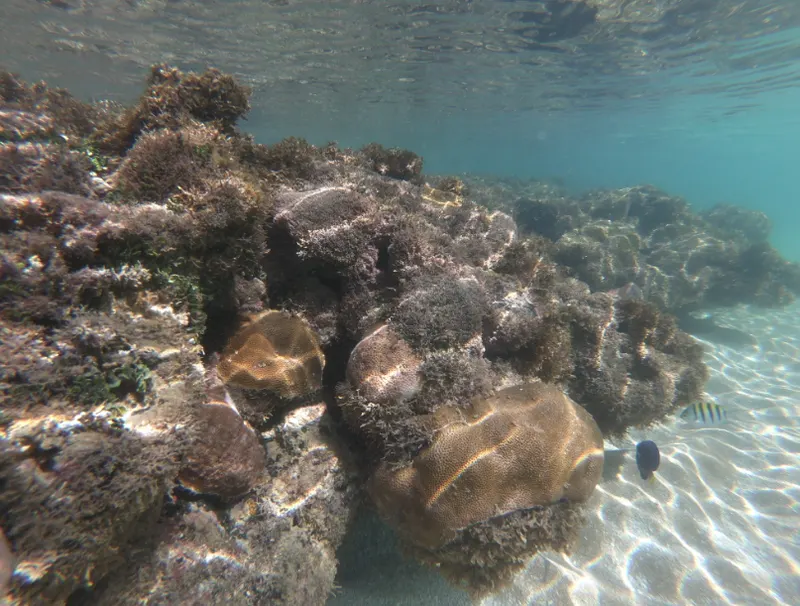
The recovery rate is still considered low and, in the case of calcareous hydroids, species similar to corals, mortality was 100%. With summer arriving and disorderly tourism in Paraíba, pressure on local marine biodiversity increases
At the beginning of the year, researchers from the Federal University of Paraíba (UFPB) found that the coral reefs along the state's coast were undergoing a serious bleaching process due to a level 2 thermal anomaly – the highest on the scale of the U.S. National Oceanic and Atmospheric Administration (NOAA), resulting in the bleaching of more than 90% of the region's coral colonies. Now, new monitoring dives carried out in October have shown that 42% of these corals have already recovered.
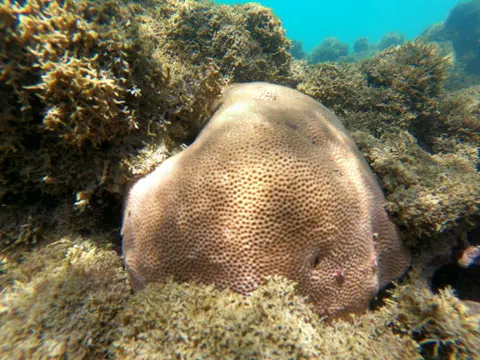
Despite the good news, the scientists consider this pace slow and warn of the risks posed by the arrival of summer. According to them, the high temperatures expected for this season and disorderly tourism activity may compromise the species' recovery process.
“The extent of the thermal anomaly was very large, lasting from March to July. The animals spent too much time in water that was warmer than they could endure. Given this condition, the mortality rate was relatively low for the corals. We identified only one dead colony in these new dives, and most are already recovering. The star coral (Siderastrea stellata), for example, which is endemic to Brazil, proved to be quite resistant. However, the calcareous hydroids of the region (known as fire coral) – which, like corals, also belong to the cnidarian group and, together, are the main builders of reefs in Brazil – showed a mortality of practically 100%,” laments Cristiane Sassi, coordinator of the Laboratory of Reef Environments and Biotechnology with Microalgae (LARBIM) at UFPB.
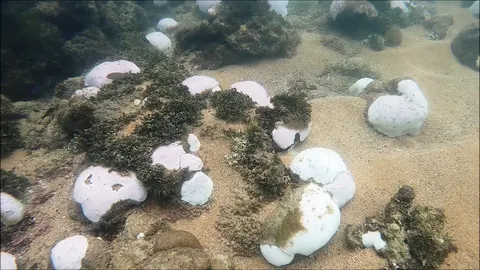
Researchers in the Paraíba coral monitoring project, which is supported by the Fundação Grupo Boticário de Proteção à Natureza, have also observed diseases such as white plague and white pox, which should not be confused with the bleaching phenomenon. While bleaching results from the loss of zooxanthellae – microalgae that give corals their color and without which they turn white, with their calcium carbonate skeletons exposed, since their tissues are translucent – the two newly identified disorders are caused by the death of the coral's or hydroid's own tissue, usually due to some type of bacterial infection.
Disorderly tourism activity in Paraíba
Reefs are important for tourism, since their beauty is a major attraction for visitors. However, with the arrival of summer, disorderly practices damage the reefs by trampling species, striking them with fins, anchoring boats in inappropriate locations, and leaking engine oil. “The catamarans should carry no more than 30 people, according to an ordinance from the Superintendency of Environmental Administration (Sudema), the state's environmental agency, for the flexibilization period, but that is not what is happening. We are seeing the pools overcrowded. We are alarmed, because marine organisms have not fully recovered. Since the recovery rate is still very low, care when visiting these environments must be greater, because they are fragile. Nature recovers, but we must give it room for that to happen,” says Sassi.
To discuss promoting public policies aimed at protecting corals in the state, the researchers are scheduling meetings with Sudena and the Port Captaincy. One of the most serious situations involves the fire coral (Millepora alcicornis), one of Brazil's most famous, which, although it bears this name, is in fact a calcareous hydroid.
For Marion Silva, coordinator of Science and Conservation at the Fundação Grupo Boticário de Proteção à Natureza, one of the main contributions of research such as the Paraíba coral monitoring is precisely to support public policies that guarantee biodiversity protection. “We are on the eve of the UN Decade of Ocean Science, set by the United Nations for the period 2021 to 2030. Access to qualified information for everyone is one of the main needs identified by society and the scientific community at the meetings held this semester across the country to build the National Decade Plan. Only in this way can we promote an ocean culture that raises awareness of the importance of the seas for our survival and well-being”.
Importance of corals
Coral reefs are the second most productive ecosystem on the planet, behind only estuaries and mangroves. By productivity, we mean the generation of oxygen. In spatial terms, they cover 0.1% of the ocean floor. However, this small percentage holds the greatest biodiversity on the planet, with reefs serving as shelter and nutrient sources for thousands of species.
These formations also reduce wave energy, which reaches beaches with less intensity, decreasing coastal erosion. Economically, about one-third of the fish species commercially harvested by humans are found in reefs, so many fishing communities depend directly on the conservation of these ecosystems.