
7 Open-Air Museums to Visit in Turkey

· 4 min read
Translated with AI assistance.Read the original in Portuguese
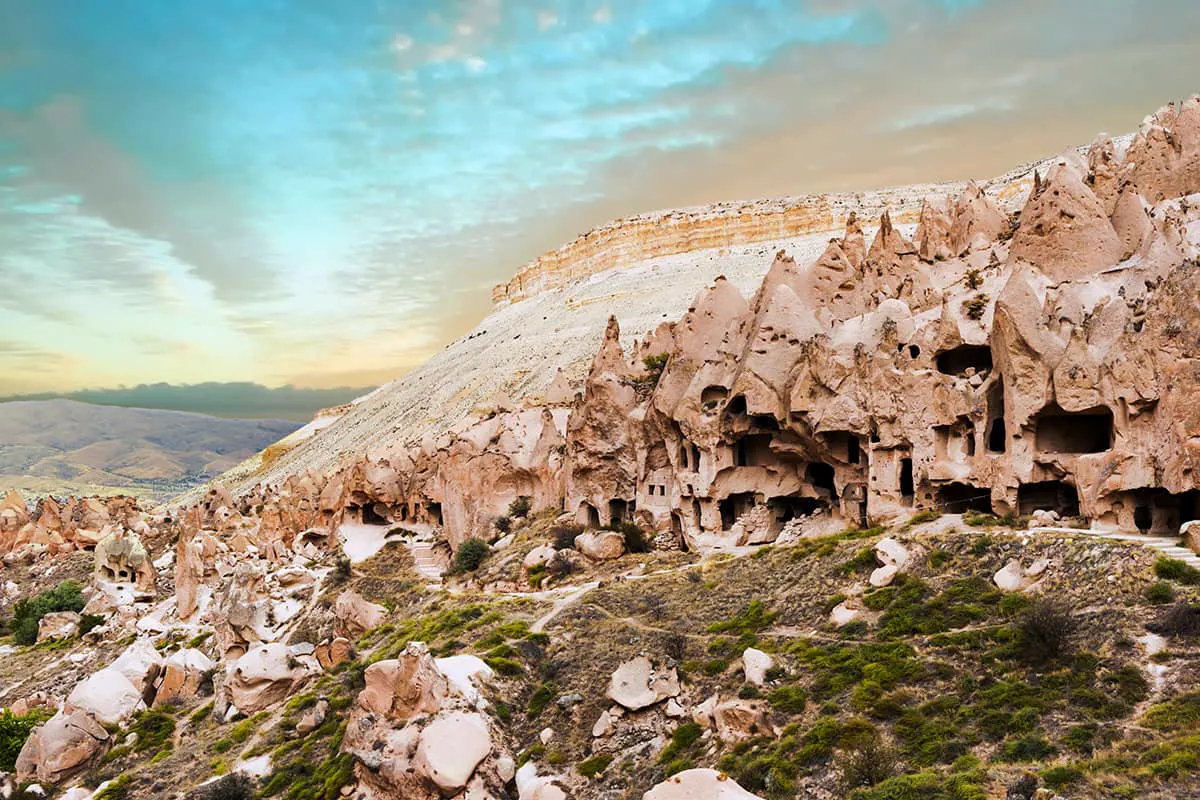
From Cappadocia to Olympos, Turkey is home to several open-air museums featuring ruins and historical artifacts
With preserved historic sites, UNESCO World Heritage listings and vast archaeological wealth, Turkey is considered a great open-air museum, with a wide range of cultural and historical tours across Anatolia. Because these are large sites under the open sky, it is essential to be well prepared before exploring each museum, as visits require long walks that can last up to three hours. So set aside plenty of time in your itinerary, wear comfortable shoes and bring a water bottle.
Christian Trails at the Göreme Museum
Located in Nevşehir, the Göreme Open-Air Museum is one of the must-see sites for anyone visiting the Cappadocia region and is listed as a UNESCO World Heritage Site as both a natural and cultural property. The museum is a rock settlement that served as the backdrop for an important era of early Christianity and has brought many relics and artifacts of Byzantine Church architecture into the present: the tunnels, corridors, staircases and chambers surrounding the area are architectural marvels and also provided protection and shelter to its inhabitants.
The most striking feature of the site is the presence of many churches, such as the Elmalı Church, the Azize Barbara Church, the Dark Church and the Hidden Church, which carry different meanings and display preserved paintings or sculptures.
The Fairy Chimneys of the Zelve Museum

Also in Cappadocia, the Zelve open-air museum is one of the most visited in the region, after the Göreme museum, and is also listed as a UNESCO World Heritage Site. Zelve is said to be the place where Christianity first spread, and it is one of the oldest settlements in Cappadocia. The museum consists of three valleys and is home to the famous fairy chimneys, rock formations shaped by volcanic activity in the region, along with caves that were once used as homes, a mosque, passageways, tunnels and 15 churches, all carved into the rock.
Hittite History at Hattusha
In antiquity, Hattusha was a walled city, with some walls dividing the city into different zones, and some of the walls bearing longer Hittite hieroglyphic inscriptions, along with palaces, temples and commercial centers.
North of Ankara, the country's capital, lies the Yazılıkaya rock sanctuary, where visitors can see Hittite relief art carved into the rocks, with more than 100 decorated towers and gates. The Ancient City of Hattusha was also recognized as a UNESCO World Heritage Site in 1986 and is located in Boğazkale, Çorum.
The Eternal Flame of Olympos
Olympos is an ancient city, the subject of many stories and mythological characters, and it was also one of the most important cities of the Lycian civilization, especially because of its port. The site stretches along two of the streams that cross it, where visitors can see remains of many civic structures, temples and monumental tombs, bathing areas, an ancient theater, a Byzantine church, the sarcophagus of Captain Eudemos, the Gelidonya lighthouse and the eternal flame of the Chimera (Yanartaş), told in the Legend of the Chimera. According to the legend, the Chimera was a three-headed monster that devastated the countryside of the then city of Lycia (now known as Olympos), in Anatolia, and used stones to start a fire that never goes out, day or night.
Treasures of the Past at Perge
Perge was a prominent ancient Roman city in the lands of Anatolia, and one of the richest cities of the ancient world. It once had the identity of a metropolis and, as a result, several signed sculptures were found in the area during excavations. At the Perge open-air museum, visitors can find a monumental gate, a stadium, an ancient theater, streets lined with columns, a hammam and the statue of the river god Kestros.
Craftsmanship at Yesemek
The Yesemek Quarry and Statue Workshop dates back to 900-800 BC and is located on the Karatepe summit of the village of Yesemek, in Gaziantep. Today, the site offers valuable insight into the process of transforming a block of stone into a sculpture. The site was home to the production of hundreds of lion and sphinx figures, many reliefs of gods and more than 300 sculptures of the era.
The Fountain of Knowledge, in Nysa
Nysa was founded 1.5 km north of Sultanhisar and is one of the most mysterious ancient cities in Turkey. Fronted by ancient fountains, Nysa was a city of science and education where many scientists and philosophers, such as the famous geographer Strabo and the philosopher Apollonius, spent part of their lives. With most of its visible structures dating to the Roman period, Nysa features a bridge linking two cities, the stadium, a secret underground passage, the theater, the library, the gymnasium and the Bouleuterion, the Parliament building.